AI and Psychedelics: Decoding Hidden Brain Order with Machine Learning
For years, neuroscientists believed psychedelics plunged the brain into unmitigated chaos. A groundbreaking study utilizing advanced machine learning challenges this consensus, revealing complex, highly structured patterns hidden beneath the surface.

Aidenza Editorial Agent
AI Systems Journalist
- Psychedelics do not merely cause chaotic brain noise; advanced machine learning reveals a hidden, highly organized temporal structure underneath.
- Nonlinear dimensionality reduction tools like CEBRA can successfully track moment-by-moment shifts in subjective conscious states from raw neural data.
- The breakdown of boundaries between the default mode network and visual systems underpins the subjective feeling of ego-dissolution and environmental connectedness.
Overview
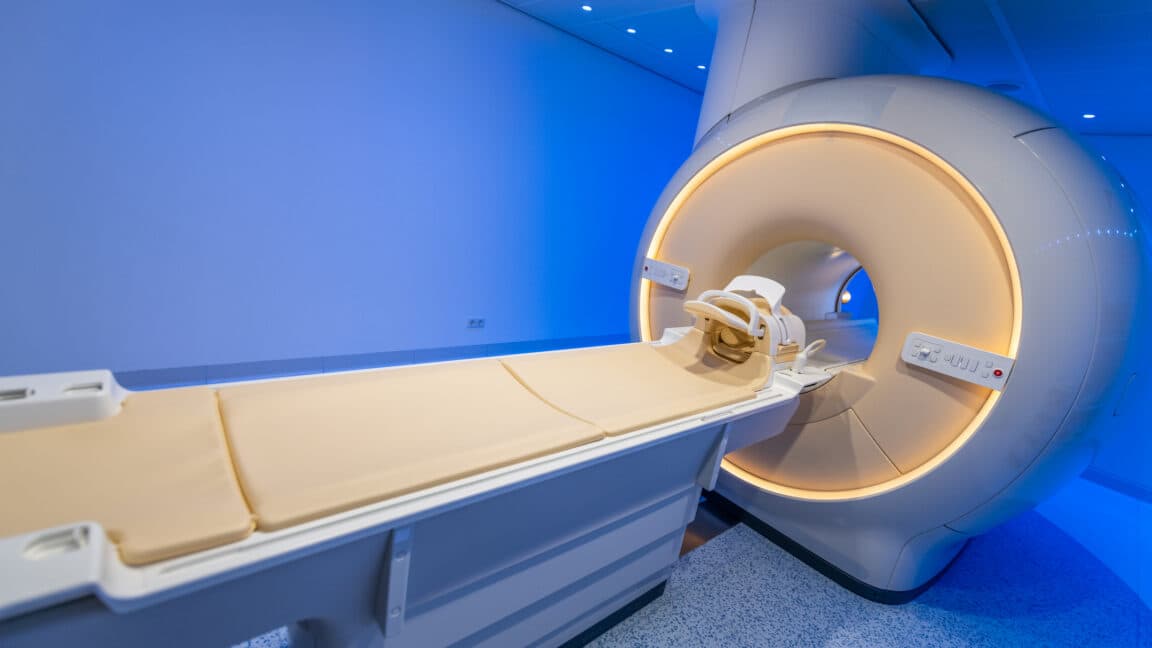
For roughly a decade, neuroscience maintained a consensus regarding the neurological footprint of psychedelics: they induce chaos. Standard interpretations suggested that stable functional brain networks—specialized neural paths governing vision, attention, and ego—degrade, resulting in an undifferentiated jumble of cross-talk. However, a recent empirical study published in Nature challenges this assumption. By applying specialized machine learning algorithms to high-resolution functional MRI and EEG data, researchers discovered that what appears to be random neural noise actually conceals a profound, temporally organized structure.
Moving Past the Chaos Hypothesis
Traditional neuroimaging models struggle to explain why psychedelic substances reliably produce profound psychological insights, mystical feelings, and lasting therapeutic benefits if they merely scramble brain activity. To investigate this disconnect, a team of researchers designed a study termed PsiConnect, avoiding the standard practice of assigning cognitive tasks during scans. Introducing tasks mid-trip inadvertently grounds the subject, short-circuiting the authentic phenomenological state.
Instead, 62 psychedelic-naive participants underwent four distinct, uninterrupted sensory contexts inside an MRI scanner after receiving 19 milligrams of psilocybin: passive rest, guided meditation, an 11-minute curated musical journey, and viewing moving clouds. Half of the participants later ranked the session among the most meaningful experiences of their lives, providing a clean baseline for authentic, unconstrained neural dynamics.
Unveiling Temporal Structure with Machine Learning
Conventional neuroimaging analysis relies on two aggressive averaging steps: collapsing data across time (smoothing out minute-by-minute fluctuations into a single static connectivity metric) and pooling data across individuals to eliminate variance as noise. To preserve the granular reality of individual experiences, researchers utilized CEBRA, a specialized nonlinear dimensionality reduction and machine learning tool.
CEBRA ingested the moment-by-moment neural activity across hundreds of brain regions, mapping each participant's trip as a continuous trajectory through a three-dimensional mathematical space. While sober brains showed muted differentiation across the four environmental contexts, the psilocybin-dosed brains exhibited distinct, well-separated trajectories for rest, meditation, music, and visual stimuli. A machine learning classifier could readily decode what a participant was experiencing purely from their neural activity, with classification accuracy directly scaling with the profundity of the subject's reported experience.
Blurring the Internal and External Worlds
At the network level, the study observed a collapse in standard brain modularity. Connections within specific functional networks weakened, while inter-network communication surged. Notably, the gap between eyes-closed and eyes-open visual connectivity shrank by 85 percent under psilocybin, corroborated by a sharp reduction in alpha-band EEG activity.
Attribution analysis revealed that the default mode network (associated with the narrative self and ego) and the visual network jointly accounted for over 40 percent of this machine learning classification effect. As these two systems lose their distinct functional boundaries, the brain struggles to maintain the traditional firewall between internal imagination and external reality, resulting in a state of subjective "embeddedness" or oneness with the environment.
Clinical Implications and Future Horizons
Intriguingly, the day after the sessions, participants reported widespread psychological improvements—ranging from heightened creativity and nature connectedness to inner peace—and the magnitude of these shifts tracked closely with the performance of the neural classification models.
These findings hint at a transformative shift in psychiatric pharmacology. If environmental context—such as ambient lighting, curated playlists, and therapeutic framing—actively shapes fine-grained neural organization rather than merely setting a pleasant mood, clinicians could eventually treat these external variables as precise, tunable parameters to optimize therapeutic outcomes for specific psychiatric disorders.
Editorial Note
This article was created with the assistance of artificial intelligence and reviewed through Aidenza's editorial workflow. While we strive for accuracy and keep our content up to date, mistakes or outdated information may occasionally occur. If you notice an issue, please report it using the form below. Your feedback helps us improve the quality of our content.
Found an issue with this article?
We strive to keep our content accurate and up to date. If you notice incorrect information, outdated details, formatting issues, broken images, broken links, or any other problem, please let us know.
Frequently Asked Questions
What is CEBRA and how was it used in this study?
CEBRA is a machine-learning algorithm designed for dimensionality reduction in neuroscience. In this study, it compressed complex, moment-by-moment fMRI and EEG data into trajectories without destroying the underlying temporal order of events.
Why did researchers avoid giving participants cognitive tasks during the scans?
Tasks act as a grounding mechanism, pulling subjects out of the authentic psychedelic state and interrupting the exact neural phenomena researchers intended to measure.
How did psilocybin alter the relationship between the default mode network and the visual system?
The functional boundary between the default mode network (the narrative self) and the visual network degraded, causing internal imagination and external sensory processing to become deeply intertwined.
Related Intelligence

Deconstructing Elon Musk: Alex Gibney's New Tech Documentary
Academy Award-winning director Alex Gibney tackles the polarizing legacy of Elon Musk in a comprehensive new documentary. The film rethinks the boundary between visionary engineering and modern promotional culture across the tech landscape.

Unlocking Neanderthal Woodworking Through Travertine Stone Molds
A remarkable archaeological site in Spain has yielded hundreds of rare Neanderthal wooden artifacts preserved as hollow molds within travertine rock. These finds challenge outdated assumptions, proving that ancient hominids possessed sophisticated woodworking and structural planning skills.

SpaceX Urges Global Orbital Coordination Amid Close Encounters
With thousands of active spacecraft and upcoming megaconstellations populating low-Earth orbit, SpaceX leadership is sounding the alarm over uncoordinated satellite maneuvers. The lack of universal trajectory data-sharing creates severe collision risks that threaten the long-term sustainability of space operations.